
Marketing is constantly changing as we advance as a society. In the “Roaring Twenties”, marketing was simplified because consumers gained their information from the same sources. According to Vittoria Socolof (2023), “The expansion of mass media, including newspapers, magazines, radio, and cinema, provided advertisers with a broader reach. Employing psychological techniques, advertisements appealed to consumers’ desires and emotions, creating a sense of need for various products”.
Technological advancements and changes in social norms have created indefinite shifts in the marketing industry. How marketers start their careers and tailor content for consumers is rapidly changing as we move forward.
Here are five trends that’s reshaping marketing as we know it:
1. Alternative Credentials

Alternative credentials made it at the top of this list because it’s going to have the biggest impact on the marketing industry as a whole.
Higher education used to be the ticket into an entry-level marketing career, until the value of a college degree became subjective. Student loans, artificial intelligence, and several other factors impacted how higher education is looked at by companies and aspiring marketers.
Many employers refused to hire recent graduates because they haven’t developed any relevant soft skills. According to Intelligent (2024), “They are often unprepared for a less structured environment, workplace cultural dynamics, and the expectation of autonomous work. Although they may have some theoretical knowledge from college, they often lack the practical, real-world experience and soft skills required to succeed in the work environment”.
More companies are willing to hire someone with certificates that aren’t issued by a university because they prioritize professional skills. According to Hugo Sarrazin (2025), “Focusing on skills instead of traditional credentials like degrees or job titles has been proven to cultivate a workforce that is both more agile and diverse”.
The demand for alternative credentials is going to have positive and negative impacts on marketing as a whole. Some entry-level marketing roles (SEO, social media marketing, etc.) can be satisfied without a college degree. However, many intermediate and advanced roles requires marketers to have knowledge of various branches in marketing and business as a whole.
2. Mobile Marketing

Mobile marketing made it on the list because the majority of consumers gain information from their phones. According to Alexus Bazen (2025), “Almost all Americans (98%) own a mobile phone. This translates to almost 331 million people”. This had made it a key reason for marketers to adjust their strategies to be compatible with cell phones.
Big advertising platforms like Bing, Google, and Meta have made it a requirement for all ads to be compatible with mobile phones.
Since the majority of people have a phone, other strategies like SMS marketing and E-mail marketing are becoming more common.
As we become more dependent on mobile devices for everyday life (applying to jobs, paying bills, etc.), mobile marketing will rapidly evolve and become a common practice.
3. AI-Generated Content
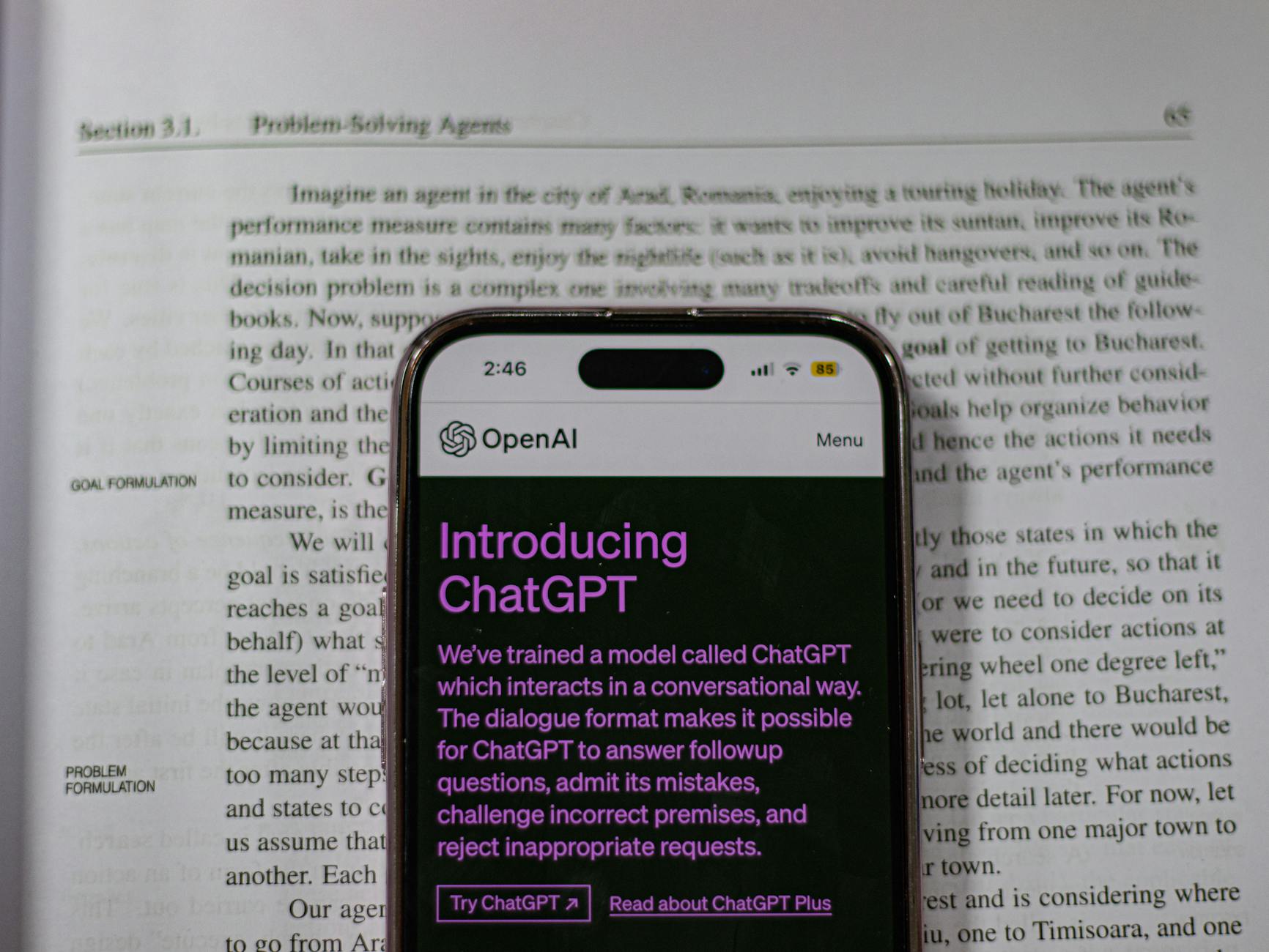
AI-generated content is the third most common trend that’s rising in marketing practices.
More advertisers and content creators are taking advantage of AI for writing, videos, audio, and images. “If more validation was needed, when I surveyed 879 content marketers, 87% reported using AI to create or help create content. Just 13% reported that they did not use AI in any capacity” (Law, Guan, and Soulo, 2025).
The rapid trend of AI content is going to have a negative impact on marketing as a whole because it going to be harder for many brands to stand out.
In the future, many companies run the risk of becoming irrelevant because consumers are able to detect AI-generated content. According to Katy French (n.d.), “According to the research, a staggering 82.1% of Americans can spot AI-generated content at least some of the time. (That number jumps to 88.4% for younger people.)”.
AI generated content is harder to distinguish from spam. Marketers that take advantage of this trend will have a hard time building trust and standing out to consumers.
4. Bluetooth Internet of Things (IoT)
Consumers are increasingly connecting basic essentials to their Bluetooth devices for a more personalized customer experience. Many companies added Bluetooth tethering features in their products, so consumers because it can make a product more convenient to have.
CF Moto added Bluetooth tethering to their motorcycles, so consumers can track it’s location and get notified of any potential mechanical issues from a notification. According to CF Moto (n.d.), “With the help of 4G, Bluetooth and other communication technologies, the vehicle can be controlled through the smartphone, breaking the limitation of physical keys, and realizing the non-inductive start of the vehicle”.
However, many consumers are concerned that businesses will use Bluetooth as an excuse to steal personal information to create more personalized marketing strategies.
In the future, Bluetooth tethering will become a common practice for many companies because consumers want products to be convenient. Marketers will have to ensure consumers that they are trustworthy by explaining how data is collected and used.
5. Freelance Work

Freelance work made it on the list because more companies are having it’s becoming a norm in many industries.
As more people leave the workforce and fewer adults go to universities, companies are resorting to hiring freelancers for short-term projects. This allows companies to access a pool of experienced professionals to complete a specific task.
Many companies prefer to hire freelancers for short-term projects because it can help them save money. According to Kumaresan Selvaraj (2024), “Businesses save on expenses like health benefits, office space, and equipment. Additionally, freelancers are paid only for the work they deliver, making them a cost-effective option for project-based needs”.
Freelance work is a rising trend and it’s expected to be more popular in the future. According to Grand View Research (2025), “The global freelance platforms market size was estimated at USD 5.58 billion in 2024 and is projected to reach USD 14.39 billion by 2030, growing at a CAGR of 17.7% from 2025 to 2030″.
Freelance work is going to have a significant impact on marketers because it will encourage more flexibility in their schedules. This will allow workers who are employed through a company to focus on other objectives.
Conclusion
Many trends are emerging that’s reshaping how marketing will change in the near future. Alternative credentials (Udemy, Google Certificates, Coursera, etc.) are becoming more accepted for some entry-level roles because companies are focusing on skills over education. Since alternative credentials don’t have the same quality of knowledge that comes with a college degree, it will be harder for companies to fill intermediate and advanced roles.
Since almost everyone has a smartphone, many companies are going to make all marketing campaigns mobile friendly. Marketers will create new strategies as consumers become more dependent on their phones for everyday life.
AI-Generated content is becoming the norm in marketing. Many consumers are aware when a company uses artificial intelligence to create content. However, it’s hard for consumers to distinguish AI content from spam. Marketers will have to create original content, so they can stand out and build consumer trust.
Consumers are increasingly wanting products to be convenient, so many companies are adding Bluetooth tethering features with their services. However, this practice can make target markets concerned about how their personal information is being handles. Marketers will have to come up with strategies to ensure consumers that their data is safe.
More companies are hiring freelancers for short-term projects. This will help companies focus on long-term goals and save profit.
References
Bazen, Alexus (2025). Cell phone statistics 2025. Consumer Affairs. https://www.consumeraffairs.com/cell_phones/cell-phone-statistics.html
CF Moto (n.d.). CF MOTO RIDE APP. https://www.cfmoto.com/global/cfmoto-ride.html#:~:text=Non%2Dinductive%20connection%20and%20quickly,T%2DBox%20installation%20is%20necessity.
Intelligent (2024). 1 in 6 Companies Are Hesitant To Hire Recent College Graduates. https://www.intelligent.com/1-in-6-companies-are-hesitant-to-hire-recent-college-graduates/
Katy, French (n.d.). New Study: 82.1% of Consumers Can Spot AI-Generated Content. Column Five. https://www.columnfivemedia.com/new-study-82-1-of-americans-can-spot-ai-generated-content/
Selvaraj, Kumaresan (2024). Do Companies Hire Freelancers? Benefits, Challenges, and Solutions. Konker. https://blog.konker.io/do-companies-hire-freelancers/
Law, Ryan, Guan, Xibeijia, Soulo, T. (2025). 74% of New Webpages Include AI Content (Study of 900K Pages). Aherfs. https://ahrefs.com/blog/what-percentage-of-new-content-is-ai-generated/
Sarrazin, Hugo (2025). Skills over degrees. Fast Company. https://www.fastcompany.com/91328670/skills-over-degrees
Socolof, Vittoria (2023). Advertising in 1920s: The Influence of Agencies, Radio, and Print in a Pivotal Decade. https://www.gobrandverge.com/advertising-in-1920s-the-influence-of-agencies-radio-and-print-in-a-pivotal-decade/#:~:text=Advertising%20in%20the%201920s%20was,ticket%20purchases%20seem%20more%20affordable.

 Crescent Freelancing
Leave a comment