Since almost everyone has a phone, mobile marketing is more effective than traditional marketing. Mobile marketing increases product sales by allowing marketers to create data-driven campaigns and segment advertising. Unlike traditional marketing, mobile marketing can increase brand awareness because it uses location-based targeting and it’s hyper-personalized for specific consumers. Lastly, mobile marketing offers superior campaigns because it’s cost-effective and measurable.
Despite mobile marketing being a superior alternative, users are concerned about how companies use their personal data, and not everyone can read metrics or KPI’s. However, these common challenges have simple solutions.
Increased Product Sales
The first advantage of mobile marketing is that it enhances product sales more effectively than traditional marketing methods. Mobile marketing targets a specific audience based on behavioral, demographic, psychographic, and geographic data. Marketers who use this method are more likely to increase sales because they can create campaigns based on data-driven insight. “Mobile marketing analytics allows marketers to gain a deep understanding of user behavior, pinpointing how users discover, engage with, and ultimately get value from mobile offerings. It provides the necessary feedback loop to optimize marketing campaigns in real time, ensuring resources are allocated efficiently and messaging resonates effectively” (Adobe for Business, n.d.). Data-driven insights allow mobile marketers to collect consumer data, which makes it easier to personalize ads. Traditional marketing reaches a large audience, but campaigns aren’t based on data-driven insight. Marketers who use traditional methods have a hard time collecting consumer data, which makes it harder to create ads that feel personalized. Unlike mobile marketing, marketers can’t effectively conduct a SWOT analysis using traditional methods because they don’t collect data from consumers.
Improved user experience is another reason why mobile marketing increases product sales. Consumers can interact with mobile campaigns, which makes it easier to convert them into repeat buyers. According to Salesforce (n.d.), “Plus, mobile devices offer a wide range of interactive features, like touch screens, augmented reality and mobile apps. This helps create immersive and engaging experiences that leave a lasting impression on your customers”. Traditional marketing lacks interactive features, which makes it less effective at leaving long-term impressions.
Brand Awareness
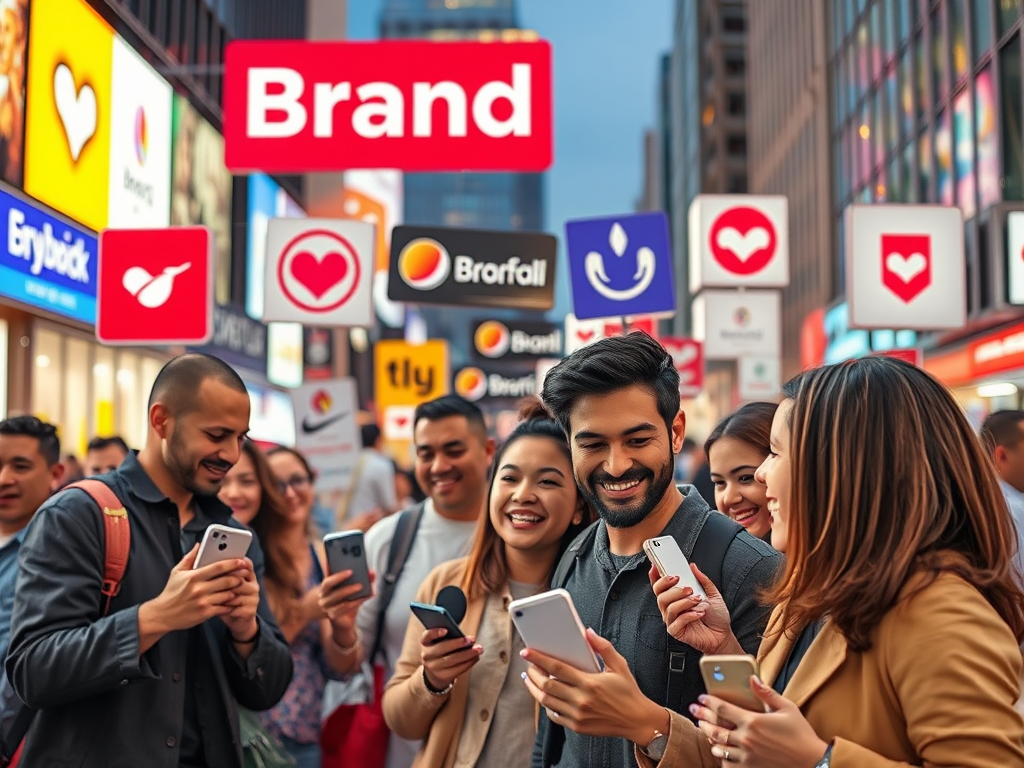
Mobile marketing is better for brand awareness because it allows users to view ads based on their algorithm. For example, if I conducted a search for a brand-new laptop, my search algorithm would direct me to various ads for that product. Mobile marketing allows consumers to only see the ads they might be interested in seeing, which reduces ad fatigue. Since traditional marketing is targeted at a large audience, the majority of consumers might not be interested in the product or service. This means that traditional methods attract people who might forget they saw the marketing campaign.
Consumers have more opportunities to see mobile marketing campaigns compared to traditional ones. Since fewer people are going outside, there aren’t as many opportunities to expose consumers to billboards or posters. “Just over one in ten (12 percent) go outside nearly every day, and 8 percent typically do so three
to four times a week” (National Recreation and Park Association, 2014). Radio and cable television engagement has also declined significantly in the past decade. This means that traditional marketing strategies will have minimal impressions. However, almost everyone has a mobile device and checks it over 100 times a day. As a result, mobile marketing can increase brand awareness because there are more opportunities to engage consumers.
Superior Campaigns

Mobile marketing provides superior campaigns because they are more cost-effective and less time-consuming than traditional marketing. “[Mobile advertisement] can reach high conversion rates without blowing your budget” (AppFlyer, 2024). Traditional marketing is often expensive and doesn’t offer measurable results. According to Danny Shepherd (2021), “Especially when you consider printing an ad in a magazine can cost upwards of $20,000, a billboard can cost $2,500/month and a 30-second TV commercial on a small local station will run $1,500 (not counting production costs). Worst of all, you have no idea what kind of hard metrics you’re getting from that spend, if any at all”. Mobile marketing is a good strategy for marketers who need high returns with a limited budget.
Consumers don’t like advertisements. In fact, consumers are more likely to skip or ignore an ad. Mobile marketing solves this challenge by combining marketing campaigns with content creation. “92% of marketers are shifting budgets from ads to brand-led content because consumers trust creators over traditional ads” (HubSpot Marketing, 2025). Mobile marketing is more likely to build consumer trust than traditional marketing campaigns.
Addressing Common Challenges

Despite mobile marketing being able to outperform traditional marketing, it still has some challenges. However, the challenges that come with using mobile marketing can easily be resolved.
Reading KPIs and Metrics is one common challenge that comes with mobile marketing. Understanding data is essential to getting the most out of mobile marketing. If you struggle with reading metrics and KPIs, there are online courses, like Coursera and Udacity, that can help improve your data literacy.
Ad blockers are a common challenge with mobile marketing. As mentioned earlier, many consumers don’t like being exposed to marketing, so it’s common for them to install ad blockers. This can be resolved by using native ads because they cause less disruption by blending in with the user’s content. “Just about any type of content on a website, in an email, or on an app can be monetized through advertising in the form of overt banner ads or covert sponsored content, often referred to as “native advertising,” (ads that appear to be part of the content and not a separate ad)” (Labrecque, 2023).
References
Adobe for Business (n.d.). Mobile Marketing Analytics. https://business.adobe.com/products/adobe-analytics/digital-analytics/mobile-analytics.html
AppFlyer (2024). Mobile Advertising 101: How to Create Your Mobile Ad Strategy. YouTube. https://www.youtube.com/watch?v=1LzbhL90qFc
Godwin, Beth (2025). Digital Marketing vs. Traditional Marketing. Analytic Marketing Partners. https://www.ampanalytic.com/marketing/direct-marketing-vs-traditional-marketing-key-differences/#:~:text=Traditional%20Marketing:%20Traditional%20marketing%20is,a%20specific%20group%20of%20people.
HubSpot Marketing (2025). 6 Marketing Trends You Need to Know. YouTube. https://www.youtube.com/watch?v=0sXYuIHPVik
Labrecque, Lauren; Reavey, Brooke; Roberts, M.L.; et al. (2023). Digital Marketing Foundations and Strategy (5th Edition). Vital Source Bookshelf. vbk://9780357720776
National Recreation and Park Association (2014). NRPA’s Park and Recreation Month OUT is IN Survey National Findings. https://www.nrpa.org/uploadedfiles/nrpaorg/tools_and_resources/park_and_recreation_month/park%20and%20recreation%20month%20omnibus%20survey%20fact%20sheet%20final.pdf
Salesforce (n.d.). Mobile Marketing: Definition, How it Works and Examples. https://www.salesforce.com/eu/marketing/engagement/mobile-marketing/guide/

 Crescent Freelancing
Leave a comment